

In-Situ Analyzers Boost Safety and Efficiency in Green Hydrogen Production
The global demand for hydrogen continues to rise. As industries aim to decarbonize, hydrogen plays a key role in reducing greenhouse gas emissions, particularly in transportation and heavy industry. Projections indicate that clean hydrogen could potentially cut up to 20% of global human-driven CO₂ emissions by 2050.
Countries worldwide are scaling renewable hydrogen production to strengthen energy security while meeting climate targets. But achieving safe, efficient, and high-quality hydrogen production requires advanced monitoring technologies. In-situ analyzers have emerged as a critical solution, enabling real-time gas measurements without compromising safety.
Understanding Green Hydrogen
Green hydrogen is produced through water electrolysis powered by renewable energy sources such as solar, wind, or hydro. This process splits water molecules into hydrogen and oxygen, using high-purity water and specialized electrolyzers:
- Alkaline Electrolyzers: Use liquid alkaline solutions like potassium hydroxide.
- Proton Exchange Membrane (PEM) Electrolyzers: Use solid polymer membranes as electrolytes.
Electrolysis cells contain an anode, cathode, and electrolyte. Hydrogen gas forms at the cathode, oxygen at the anode. Materials like nickel and platinum ensure durability and efficiency under challenging operational conditions. By pairing electrolysis with renewable energy, green hydrogen production achieves zero greenhouse gas emissions.
Other hydrogen types include:
- Blue Hydrogen: Produced from fossil fuels with carbon capture and storage (CCS).
- Pink Hydrogen: Electrolysis powered by nuclear energy.
- Grey & Black Hydrogen: Derived from natural gas and coal, contributing significantly to emissions in Europe.
Despite its promise, green hydrogen production faces cost challenges, though improvements in electrolysis and renewable energy are reducing these barriers.
Safety in Hydrogen Facilities
Hydrogen’s high flammability and energy potential make safety a top priority. Process industries rely on Safety Integrity Levels (SIL) to ensure instrumentation meets rigorous reliability and safety standards. Defined by IEC 61508 and IEC 61511, SIL ratings (SIL-1 to SIL-4) quantify risk reduction in Safety Instrumented Systems (SIS).
Hydrogen-specific safety standards include:
- ISO 19880-1:2018: Guidelines for hydrogen fueling stations.
- ISO/TR 15916:2015: Safety basics for hydrogen systems.
- IEC 60079 Series: Equipment guidelines for explosive atmospheres.
- ISO 22734:2019: Design and safety requirements for hydrogen generators.
- NFPA 2 Hydrogen Technologies Code: Fire and explosion prevention.
- EN 17127:2018: Safety standards for hydrogen refueling stations.
While these standards do not mandate SIL ratings, risk assessment methodologies like HAZOP or LOPA often lead to SIL-2 or higher recommendations, depending on facility hazards.
Key monitoring points in hydrogen production include:
- Anode and cathode outlets for oxygen and hydrogen purity.
- Electrolyzer cell outlets to detect leaks.
- Gas purification systems for end-product verification.
- Storage and distribution points to ensure safe hydrogen delivery.
- Safety-critical locations for continuous leak detection.
In-Situ Analyzers: Real-Time Safety and Efficiency
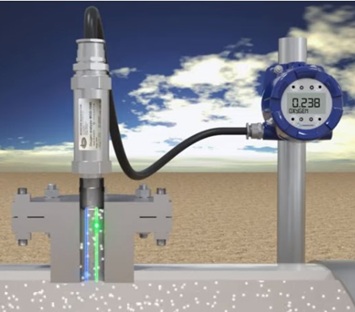
Traditional gas monitoring involves sample extraction and venting, which may compromise safety and environmental integrity, especially in high-pressure systems. In-situ analyzers, like Modcon’s MOD-1040 and MOD-1060, provide real-time measurements directly in the process stream, eliminating these risks.
MOD-1040 Oxygen Analyzer:
- High precision in low oxygen detection for safe operation.
- Rapid response time for real-time safety interventions.
- Explosion-proof design for hazardous environments.
- Robust under high pressure and industrial conditions.
- Built-in diagnostics aligned with SIL-2 standards.
MOD-1060 Hydrogen Analyzer:
- Accurate hydrogen measurement using thermal conductivity technology.
- In-situ monitoring for real-time process control.
- Industrial-grade construction for reliability in demanding environments.
- Designed for SIL-2 compliance, currently undergoing assessment.
Why SIL-2 Certified Analyzers Matter
Integrating SIL-2 certified analyzers like MOD-1040 and MOD-1060 ensures critical safety functions operate reliably. Facilities gain:
- Precise gas monitoring.
- Rapid detection of hazardous conditions.
- Compliance with safety best practices.
- Reduced operational risk in hydrogen production.
As the green hydrogen market expands, these advanced safety solutions are essential to building a secure, sustainable hydrogen industry.